Capabilities & Collaboration
Rigorous methods. Flight-tested evidence.
We help government, industry, and research partners develop and validate UAV technologies for challenging real-world conditions, including agile maneuvering, flight in turbulence, and multi-domain collaborative autonomy.
The Performance-Assured Control and Estimation (PACE) Lab specializes in the gap between state-of-the-art theory and credible flight test evidence. We combine rigorous analysis with rapid UAV integration, software development and flight testing so that new methods are not only publishable, but practical and defensible.
Discuss a project • See demonstrated results
Why PACE
-
Beyond nominal flight
We work in regions of flight and with novel vehicle configurations where conventional assumptions and approaches fail.
-
Designed to tackle uncertainty
Modeling error and external disturbances are not an afterthought. They an integral part of the design problem and resulting performance and safety guarantees.
-
Models that bridge the gap
We identify physics-based flight dynamic models that bridge the gap between traditional control-oriented models and high-fidelity computational models.
-
Rapid implementation and flight testing
We translate novel control and estimation methods into PX4 and ROS through proven experimental workflows, spanning rigorous simulation and flight testing of small UAVs.
-
Leverage mathematical structure
Our control, estimation, and autonomy technologies leverage dynamical system structure (e.g., symmetry, invariance, passivity) to improve performance, robustness, and safety assurances.
Our distinctive capability is the connection among three activities that are often separated: nonlinear aircraft modeling, control and estimation with performance guarantees, and experimental flight validation.
Problems we help solve
Partners come to us when they need to:
- characterize a new, unconventional, or poorly modeled aircraft;
- evaluate a controller, estimator, sensor, or autonomy algorithm;
- operate safely beyond nominal flight conditions;
- infer wind or aerodynamic states without relying on dedicated sensors;
- translate novel robotics concepts to the aerial domain; or
- design UAV ground test and/or flight test campaigns.
An integrated capability from modeling to flight
-
Design, instrument, and integrate UAVs
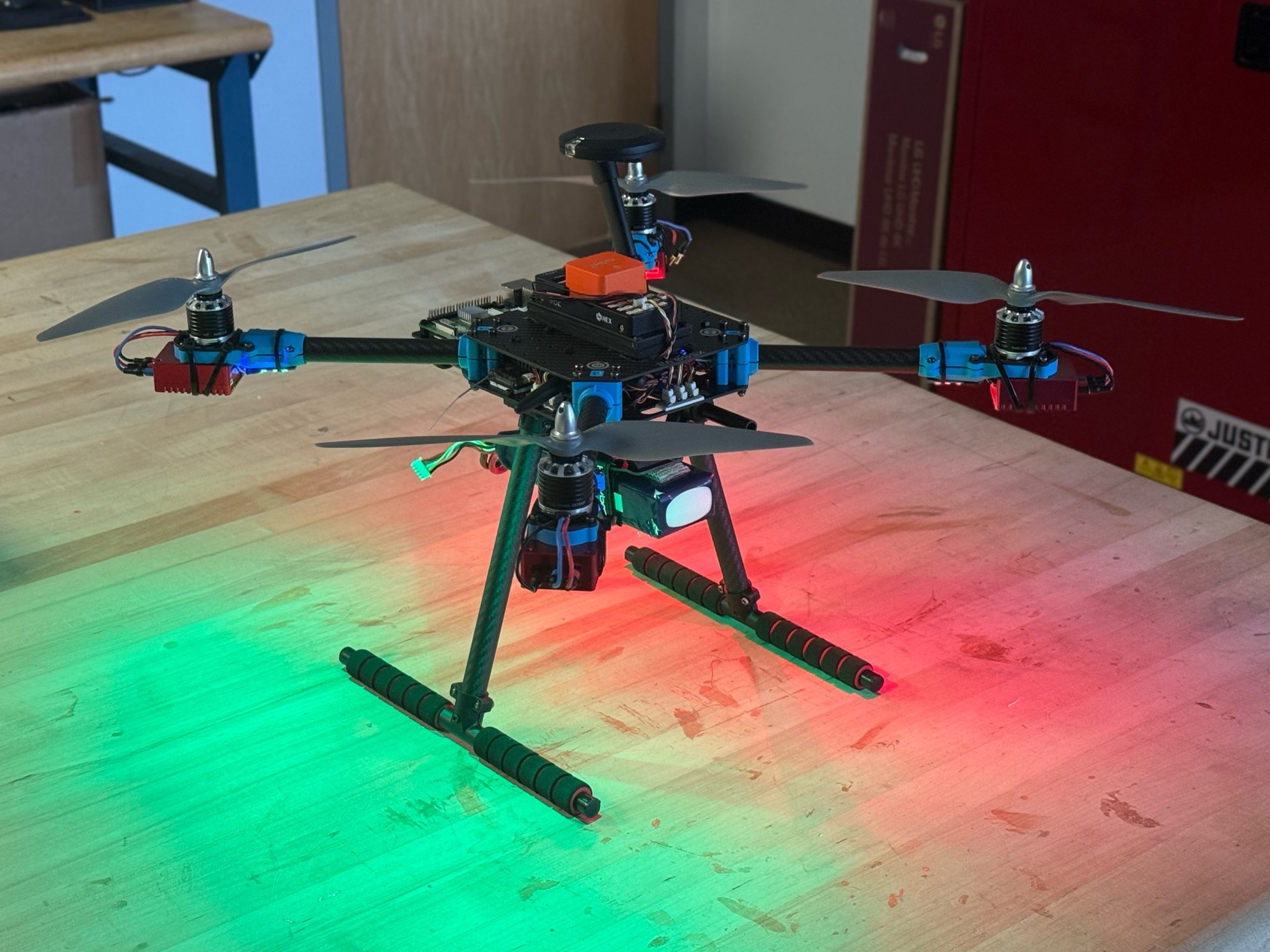
Design and configure multirotor, fixed-wing, and eVTOL platforms with new sensors, payloads, and flight control software.
Tools: PX4, ROS 1 & 2, MATLAB, SIL/HIL, UAVCAN/DRONECAN
-
Identify aircraft flight dynamics
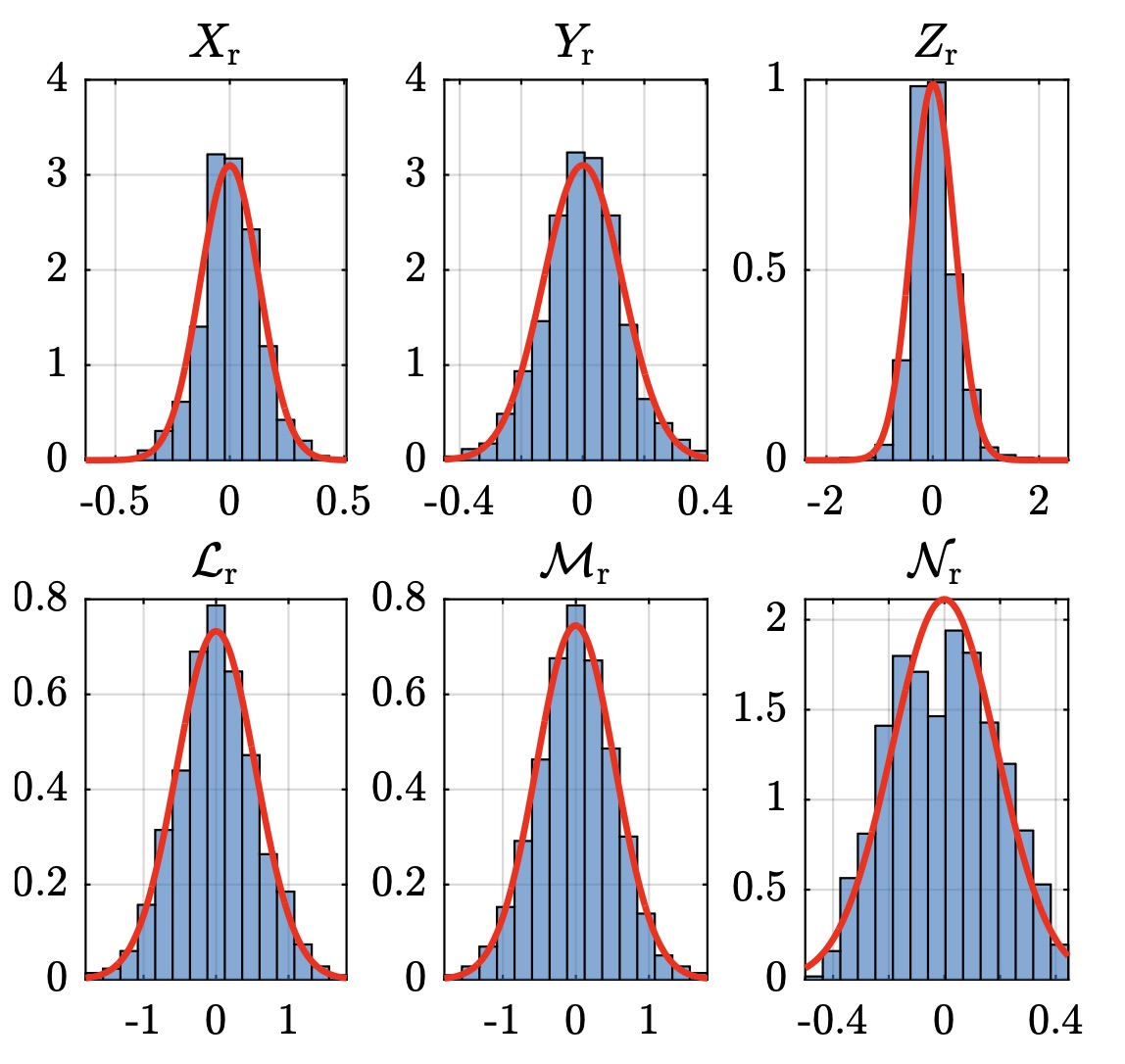
Identify uncertainty-quantified models from flight data for use in nonlinear control and estimation.
Techniques: Equation Error, Output Error, Machine Learning, Multivariate Orthogonal Function Modeling, Stepwise Regression
-
Control and estimation design
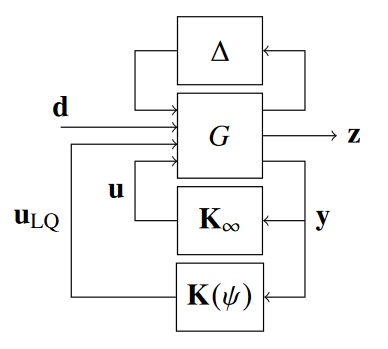
Develop safety-assured control laws and state/disturbance estimators for uncertain and stochastic nonlinear systems.
Bodies of Theory: Differential Geometry, Passivity-Based Control, Invariant EKF, Robust H∞ Control & Filtering, Stochastic Stability
-
Flight test validation
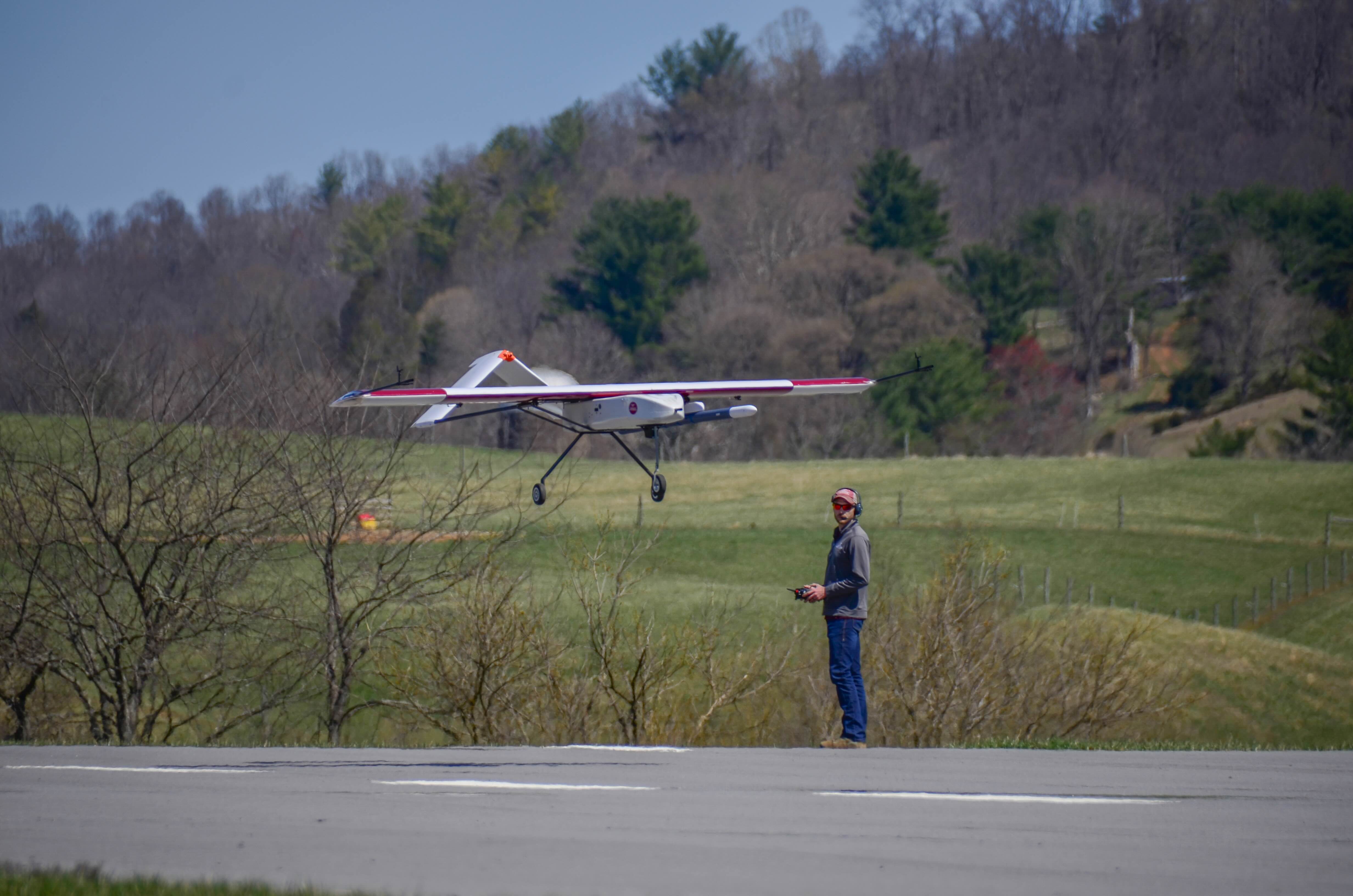
Build evidence through simulation, SIL/HIL, controlled wind experiments, and outdoor flight tests, increasing risk in stages.
Facilities: MSU North Farm and South Farm, Raspet Wind Wall and motion capture system, Low-speed wind tunnel
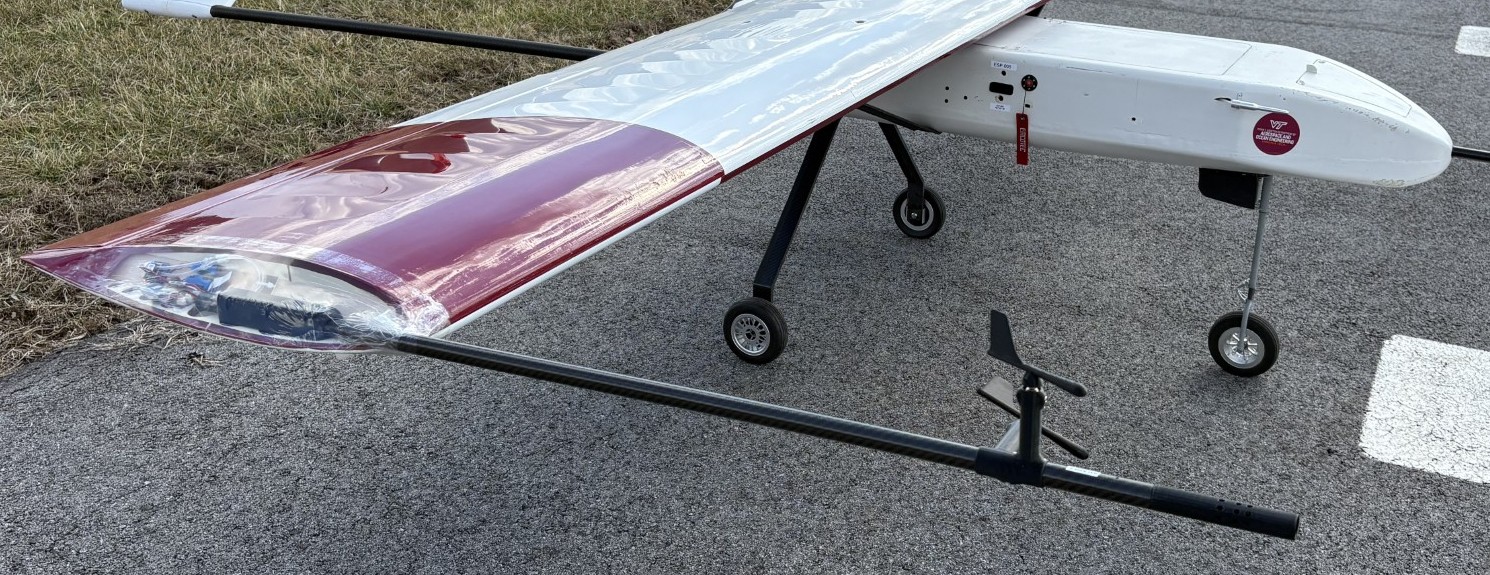
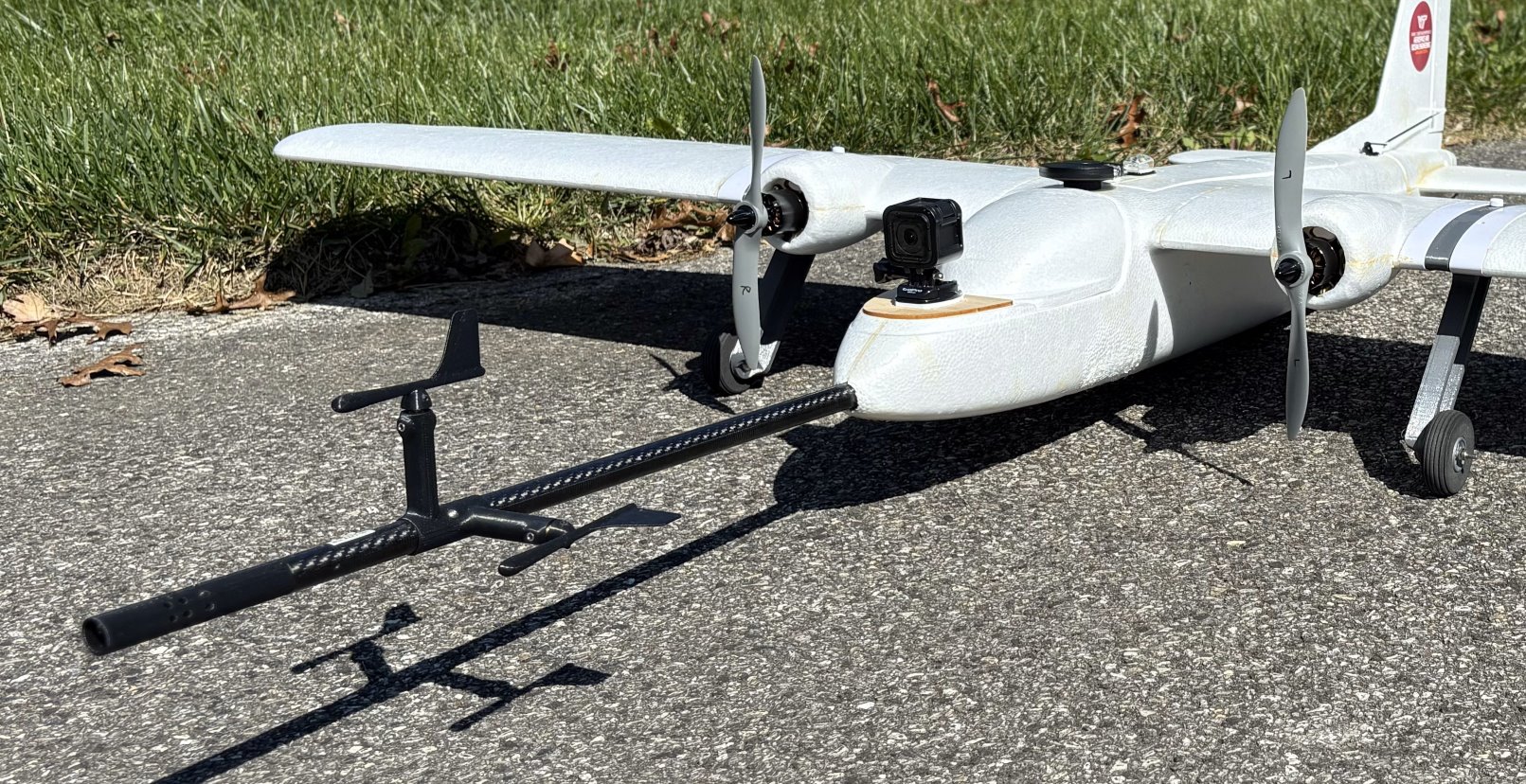
Attritable air data system
Our custom small UAS air data units provide open and adaptable alternatives to conventional commercial probes. The designs emphasize low cost, 3D-printable construction, replaceable components, and configurations tailored to high-risk UAV flight testing.
- GitHub Repository
- Documentation site coming soon
Research aircraft
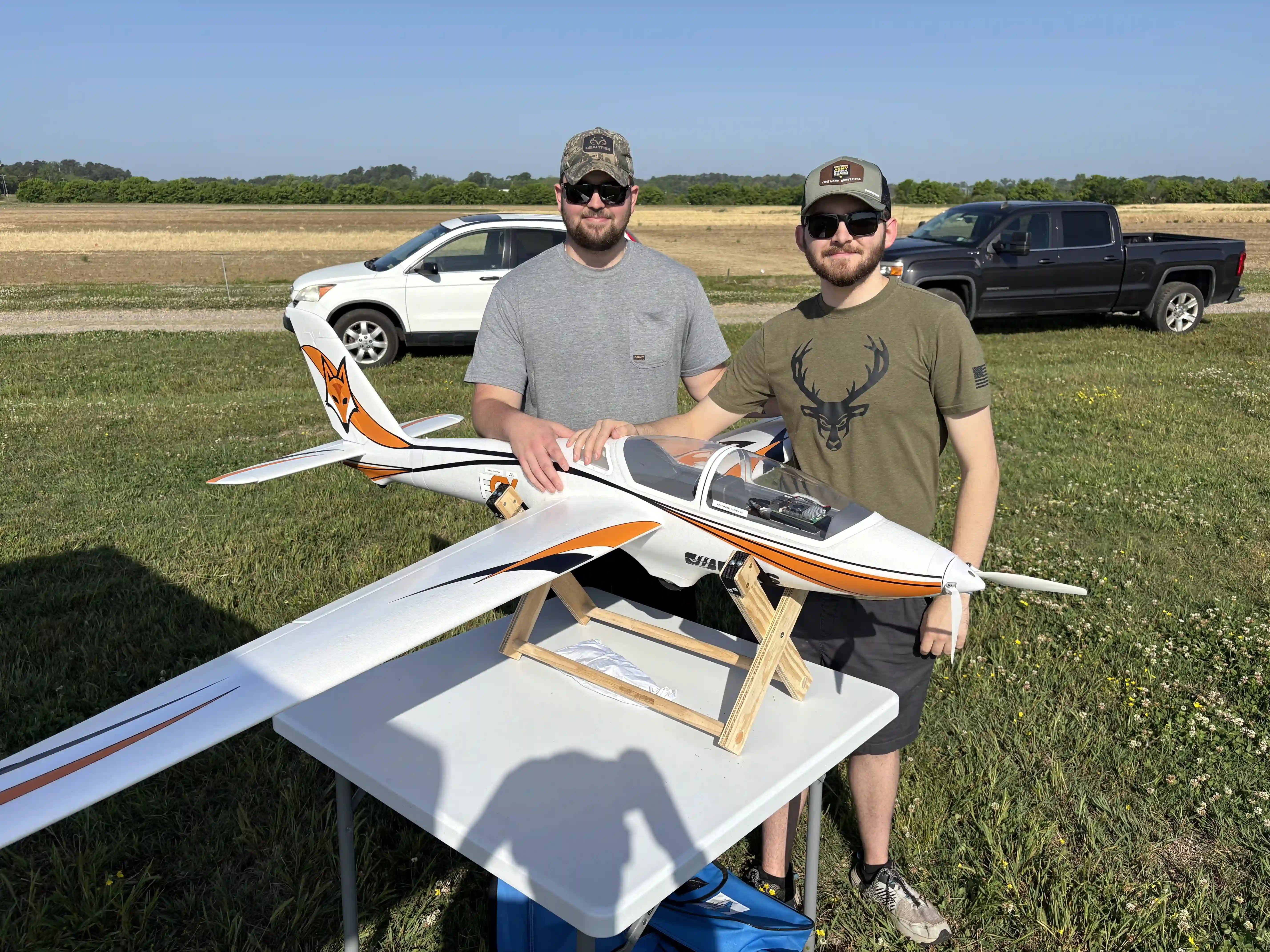
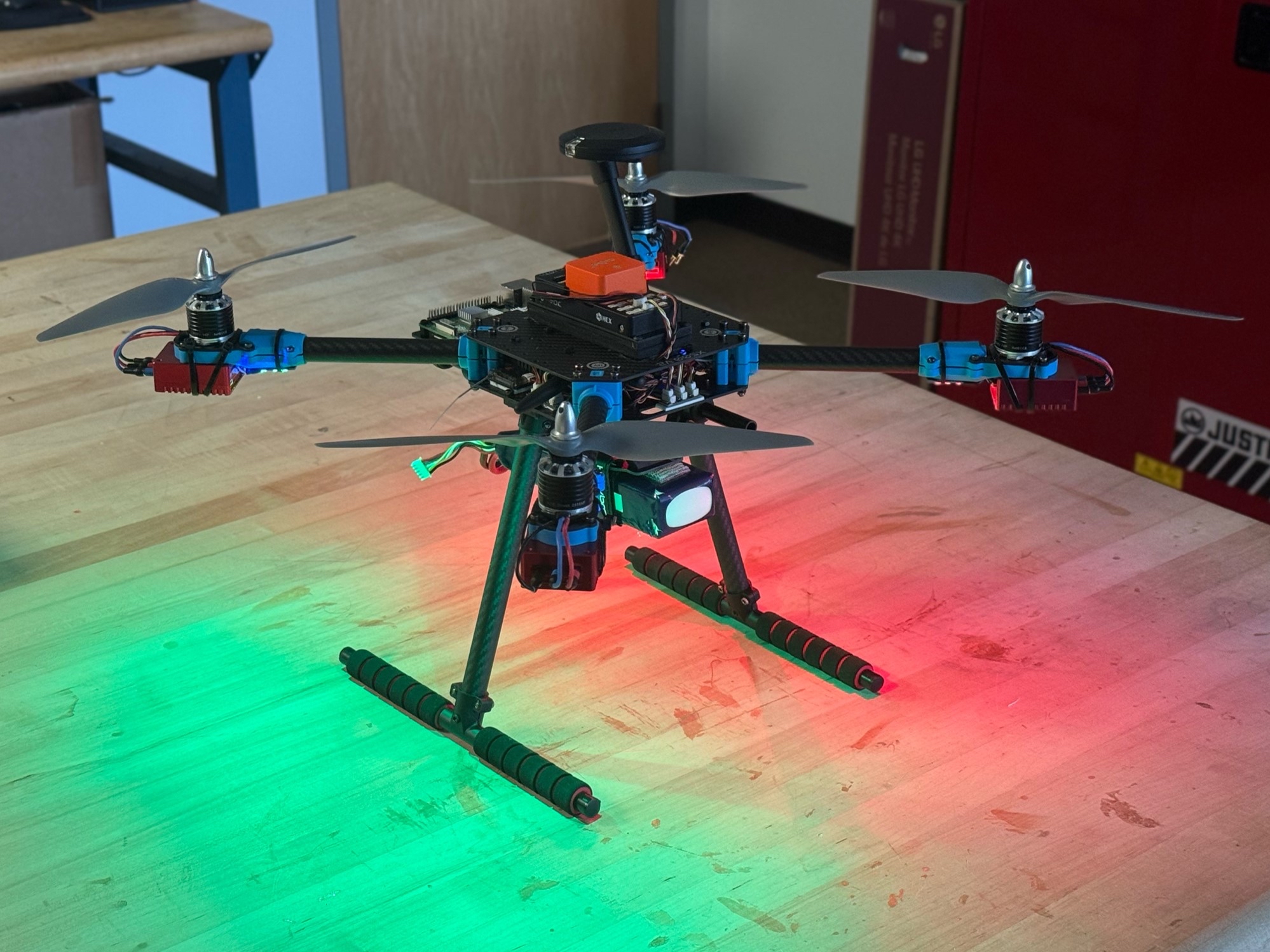
Our go-to aircraft are selected for fast modification, modularity, and risk mitigation.
- Technical specifications coming soon
- eVTOL Aircraft In Development
Demonstrated results
Wind estimation and synthetic air data
We developed model-based wind estimators and demonstrated their rigorous convergence guarantees using fixed-wing and multirotor flight test data.
- Leverage symmetry to design a reduced-order observer
- Use stochastic calculus to prove robustness to turbulence
- Estimate bulk atmospheric flows using robust filtering
- Incorporate unsteady aerodynamics into model-based algorithms
- Use an energy-based perspective to handle maneuvering flight
- Improve computational aspects of UAV-based wind profiling
- Mitigate uncertainty and wind estimate sensitivity to modeling error
- Use wind estimates for bio-inspired source localization
Aircraft system identification
We derived identifiable, physics-informed models for model-based design and developed techniques to identify these models from flight data.
- Derive an evaluate a physics-based model for nonlinear multirotor aerodynamics
- Leverage robust control to safely obtain information-rich flight data for unstable aircraft
- Model and identify stall spin aerodynamics from flight data
- Lower the barrier to nonlinear model identification
- Identify a control-oriented model of fixed-wing unsteady aerodynamics
- Open-source small UAV flight testing and control law evaluation
Stall-spin modeling and flight termination systems
We identified nonlinear spin dynamics from flight data, designed robust stall spin flight termination methods, and validated these approaches through small UAV flight testing.
- Robustly guide the spinning descent along a desired direction
- Model and identify stall spin aerodynamics from flight data
Work with us
We work with academic, government, and industry partners through sponsored and joint research, proposal teams, independent technology evaluation, payload and platform integration, and focused wind-tunnel or flight-test campaigns.
Bring us the difficult part.
If you have an aircraft, sensor, autonomy technology, or operating condition that needs credible modeling and experimental evidence, send a short description of the system, the conditions in which it must operate, and what you need to demonstrate.